Trucks parking on your lot without paying? Send them a bill.
A tow truck removes one trailer and the driver who might have paid. A camera at the entrance reads the carrier off the cab door, gives them fifteen minutes to move or open an account, and invoices the company for every stay after that. The problem becomes a revenue line.
Get a read on my lot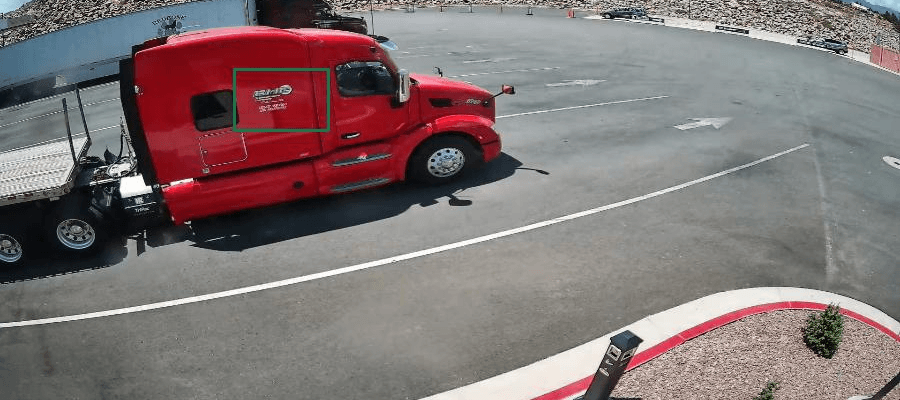
A read in progress on a site's own exit camera. Installed to watch the diesel exit, never aimed at cab doors.
Invoice first. Tow last.
Every remedy for unauthorized truck parking that exists today starts with a person finding the truck. A yard manager walks the lot, writes down a plate, and calls a tow company. The tow needs a rotator for a loaded trailer, takes hours, and in many states the fee a private lot can charge is capped below what the rotator costs. Booting a USDOT marked vehicle is banned in some states. Cargo liability lands on you the moment the trailer moves.
Argus Pass replaces the walk with a camera and the tow with an invoice. The ladder is notice, invoice, reminders, a dispute window, collections, then a ban list. The tow stays available as the last step for an abandoned unit, authorized by a person, never triggered by a camera.
The record behind every invoice is built for a dispute: paired entry and exit photos on a synced clock, the camera uptime log, the registry lookup, and a dated photo of the signage at every entrance.
A truck parks. We handle the rest.
Six steps, none of them yours. The driver never rolls down a window and nobody on your payroll touches a payment.
Cameras record entry and exit.
Stays are billed to the motor carrier by USDOT number.
15 minute grace period. Account holders pay a lower rate. Operated by Argus AI for the property owner. Questions and disputes: pass@getargus.ai
Step 1. The sign at your entrance is the contract. Rates, operator, and a way to dispute, posted where the driver already looks.
Step 2. A read in progress on a site's own exit camera. The system tracks the cab door through the pass and combines evidence from every frame.
Step 4. Fifteen minutes, three doors. Open an account, move the truck, or do nothing and get invoiced when it leaves.
Signage sets the terms
Posted at the entrance the driver already passes. Park here and you will be billed, verified by camera.
The camera reads the truck
A side scan pulls the USDOT number and carrier off the cab door. A plate gives you a vehicle. The door gives you the company that owes the money.
Known carrier bills instantly
If the carrier has an Argus account, the clock starts. No message needed.
New carrier gets 15 minutes
We text and email the DOT contact on file, then hold a 15 minute grace period before billing starts. They can open an account at a lower rate, move the truck, or be invoiced.
Departure closes the stay
The camera sees the truck leave and stores the paired entry and exit images.
Invoice, then collections
The invoice goes to the carrier on file. If it is not paid, we escalate and collect. You never chase it.
The invoice has to survive a dispute.
Camera billing works when the record is clean. We built the evidence chain first and the billing second.
Paired photos, every stay
Entry and exit images, timestamped on a synced clock, held with the camera uptime log. One arrival matched to one departure.
Billed to the USDOT number
Carrier records from the public federal registry. No driver DMV lookups, which is where most plate billing programs get into trouble.
Signage on file
Every entrance photographed and dated. Posted terms are what forms the agreement, so we can produce them years later.
A real dispute path
Fifteen minute grace, a stated dispute window, and a neutral appeal. An invoice, never a citation.
Questions yard and lot owners ask
How do I stop semi trucks from parking on my property?+
Charge for it. Post signage that parking is billed and camera verified, let the camera read the carrier off the cab door, and invoice the company. Trucks that do not want to pay leave inside the 15 minute grace period, and trucks that stay become revenue. Fencing and towing cost money and remove the demand you could be selling to.
Can a private lot legally bill a truck for parking with cameras?+
A private operator cannot fine anyone, and Argus never issues anything that looks like a citation. The charge is a contract formed by posted signage: the sign states the rate, the operator, and how to dispute, and parking is acceptance. Courts have enforced sign formed parking contracts. Argus bills the motor carrier as a business invoice with paired entry and exit photos as the record. Rules on signage, grace periods and late fees vary by state, and the program is built to the strictest of them.
Why not just tow?+
Towing a loaded tractor trailer needs a rotator, takes hours, exposes you to cargo liability, and in many states the fee you can charge for a private property tow is capped below what the tow costs. Some states bar booting commercial vehicles outright. An invoice to the carrier costs nothing to issue and leaves the truck where it is until the driver moves it.
Do you read the license plate or the USDOT number?+
The USDOT number on the cab door, confirmed against the federal carrier registry. A plate resolves to a vehicle and requires a DMV lookup on an individual, which is where plate based billing programs have run into privacy law. The USDOT number resolves to the company, its authority status and its contact on file, with no driver data involved. Plate reads are kept as a fallback record.
What if the truck has no USDOT number, or the read is unclear?+
The system reports nothing rather than guess, and keeps an evidence photo. In the field it correctly withheld trailer, MC and equipment numbers and flagged one truck with no registry record instead of inventing one. Those are the trucks a compliance workflow most wants to see, and they go to you as a flagged event.
What happens to a bill the carrier does not pay?+
Argus runs the escalation: reminders, a stated dispute window with a neutral appeal, then collections. You never chase it. The carrier can also open an account at any point and get a lower rate on every future stay.
How many cameras does a yard need?+
A lot with a single entrance needs one camera, and it reads both directions, so arrivals bill and departures free the stall. The field results on this page came from three existing 1080p security cameras that were never moved or aimed for the job. A survey tells you whether you need anything more.
Tell us about the lot.
How many spaces, how many entrances, and what cameras are already up. We reply within one business day with what the entrance camera would see and what the first ninety days would bill.
Prefer a call? Robert Putt, founder. 402 915 2886 or robert@getargus.ai.