Three routes. Fuel, tolls and tax on each one.
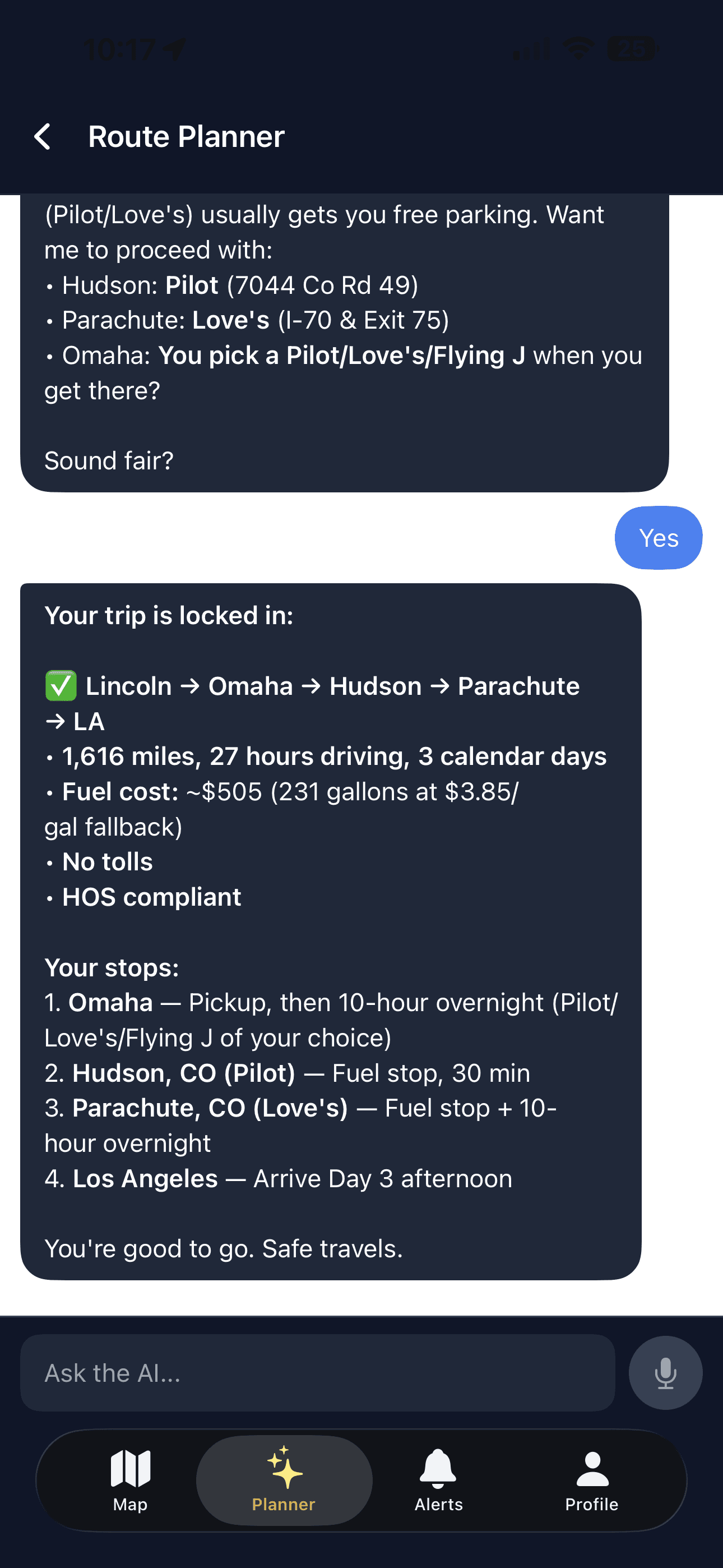
Before the truck moves, the driver sees three ways to run the load and what each one costs: fuel at your network price, tolls by axle and time of day, and fuel tax by state. You set the box. The driver picks inside it. The dashboard keeps the receipt.
The shortest clock to the dock. Shown with its fuel, tolls and tax so speed has a price tag.
The lowest total of fuel, tolls and tax inside the hours the driver has. Usually not the shortest miles.
The route a good driver would pick: truck safe roads, reachable parking, and a cost close to the cheapest.
Get an Argus Fleet quote
Tell us the fleet and the founder replies within one business day with an Argus Fleet quote and what the first 60 days look like.
Robert Putt, founder. 402 915 2886 or robert@getargus.ai.
Fuquay-Varina to Detroit. 705 miles, two days.
The driver asked for the cheapest fuel and a place to park. The Agent put the fill at the BP in Hillsville, Virginia at mile 175, the cheapest on the route, and landed the 30 minute break and the overnight at Lancaster, Ohio at mile 477. About 109 gallons, around $420, no tolls, legal on hours.
That is one route priced. The three option view puts two more next to it with the same lines on each.
Hear the driver ask for itSix lines on every route.
Fuel
Every pump on the route priced, the fill timed against the tank, and the route priced on your fuel card network price once the card is connected.
Tolls
Computed by axle count, weight and time of day, with the transponder or cash rate the truck will actually pay.
Fuel tax by state
Miles by state come off the route itself, so the cheapest pump is the cheapest after tax, not the cheapest on the sign.
The clock
Each route is legal on hours before it is shown. Breaks and the overnight sit where the driver can actually reach them.
Truck legal
Height, weight, length, axle count and all nine HazMat classes shape every option. No route that the truck cannot run.
The receipt
What the chosen route cost and what the other two would have cost lands on the fleet dashboard, per trip and per driver.
Connect the card. The routes price on what you pay.
Every fleet's fuel rate card is different, and a route priced on sign prices is priced for someone else. Fuel card integration brings your network price into the route, so the cheapest stop is the cheapest for your fleet. In build.
Questions fleets ask
What does the driver see?+
Three ways to run the load, each with fuel, tolls and fuel tax by state, the hours it takes, and where the breaks land. The fleet sets which options are allowed. The driver picks inside that box, by voice or by tap.
Is this live today?+
The priced route is live today: the Agent prices fuel across the route, computes tolls by axle, weight and time of day, and keeps the trip legal on hours. The three option view with every line on every route is in build, and this page carries that label until it ships.
How does fuel card integration change the price?+
A sign price is not what a fleet pays. Once the fleet's fuel card is connected, routes price on the network price the fleet actually gets, so the Agent sends the truck to the stop that is cheapest for that fleet, not for the public.
How is this different from PC*Miler or a TMS route planner?+
A dock side planner decides the route once, before the trip, on a rated mile. Argus prices the route during the trip and keeps re pricing it as fuel prices, the clock, parking and the road change. Keep the TMS plan; Argus is the layer that runs it.
Does the fleet get the numbers?+
Yes. Every trip lands on the fleet dashboard with the route the driver chose, what it cost, and what the other options would have cost. That is the receipt the 60 day 10X guarantee is measured against.
See your routes priced
Tell us the fleet and the founder replies within one business day with an Argus Fleet quote and what the first 60 days look like.
Robert Putt, founder. 402 915 2886 or robert@getargus.ai.